Mouncella Serif Typeface for Handmade Creators
As someone who designs printable wall art, hand-stamped tags, and custom wedding invitations — and who’s spent way too long hunting for a serif font that looks elegant *and* cuts cleanly on my Cricut — I’ll say it plainly: Mouncella is the modern serif typeface I’ve been waiting for. It’s not just pretty; it’s purpose-built for makers who need beauty *and* function in one package.
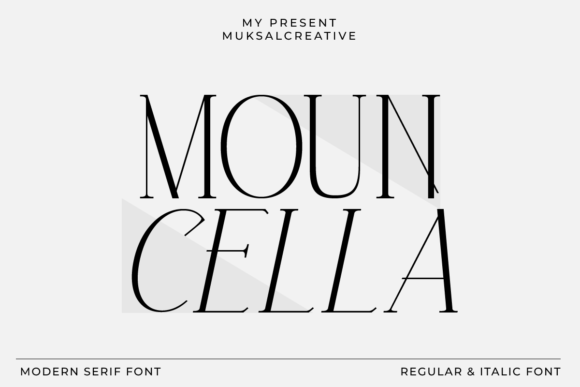
Mouncella balances warmth and precision. Its gentle contrast, soft serifs, and open letterforms give it a refined but approachable presence — think “thoughtful boutique” rather than “stuffy textbook.” Unlike many serif fonts that get muddy at small sizes or stiffen up when enlarged, Mouncella stays graceful whether you’re laser-cutting 6mm gift tag text or printing a 24-inch farmhouse welcome sign. That versatility is rare — and invaluable when your product line spans stickers, mugs, digital planners, and physical packaging.
I use Mouncella across nearly every category in my shop: candle labels (especially for lavender or vanilla-scented lines — its soft curves echo botanical elegance), wedding welcome boards (paired with a delicate script for names and a clean sans for details), seasonal SVG bundles (its ornaments and alternate glyphs add instant charm to holiday cards or Easter printables), and even product packaging for handmade soaps and bath salts. The multilingual support means I can confidently offer bilingual versions of my planner pages without swapping fonts — a huge time-saver when updating listings for international Etsy customers.
What makes Mouncella truly shine in craft applications is its thoughtful extras. The included alternates let me swap in a more decorative “a” or “g” for invitation headlines without switching fonts entirely. Special glyphs — like floral dots, subtle flourishes, and border elements — drop right into Canva or Silhouette Studio as standalone design assets. And yes, those ornaments cut beautifully at 8–10pt on vinyl — no jagged edges or lost detail. I’ve tested it on matte sticker paper, kraft tags, and glossy mug decals, and each time, the letterforms hold their shape and readability.
For readability on small-format items, here’s what works: Use standard glyphs (not swashes) for anything under 14pt — especially on product labels, jar tags, or mini stickers. Reserve the ornamental alternates and ligatures for display use: greeting card headers, social media quote graphics, or framed printable art. On Cricut Design Space, I always convert Mouncella to outlines before cutting intricate swashes — it prevents unexpected kerning shifts during export. And because it’s a well-hinted OTF/TTF font, mockup previews in Adobe Photoshop or Procreate stay crisp, even when zoomed in for client approvals.
Font pairing is where Mouncella becomes even more powerful. As a modern serif, it plays beautifully with contrast. Try pairing it with a light-to-medium weight sans serif (like Montserrat or Inter) for clean, balanced product labels — Mouncella for the brand name, the sans for ingredients or care instructions. For wedding suites or boutique packaging, layer it with a relaxed handwritten font for names or quotes; Mouncella’s structure grounds the whimsy without competing. Avoid pairing it with overly decorative scripts or heavy slab serifs — they’ll fight for attention instead of harmonizing.
You’ll find several weights and styles in the full Mouncella family — regular, italic, bold, and bold italic — plus OpenType features like contextual alternates and stylistic sets. That means you’re not just buying a single font file; you’re getting flexible design assets for consistent branding. Whether you’re building a cohesive label system for a new tea line or designing a seasonal SVG bundle for summer picnics, having access to true italics (not skewed fakes) and real bold variants helps maintain typographic integrity across formats.
One practical note many crafters overlook: licensing. Mouncella is a commercial font, meaning you *can* use it in products you sell — physical items like printed invitations or embroidered tote bags, digital downloads like Canva templates or printable planners, and even SVG files for Cricut users. Just be sure your license covers the scope of your business: if you’re selling templates on Etsy or offering logo design services to clients, confirm the license includes extended commercial use. Most reputable sellers include clear terms — and Mouncella’s documentation does — so you’re covered without guesswork.
In my day-to-day work, Mouncella has replaced three other serif fonts I used to juggle. It handles short phrases (“Hand-poured,” “Est. 2022,” “With Love”) with quiet confidence, supports longer body text in printable guides (when set at 11–12pt with generous line height), and adds unmistakable character to minimalist designs. Customers notice it — not by name, but by feel. They tell me my labels look “more premium,” my invitations feel “thoughtfully designed,” and my digital printables have “that professional finish.” That perception? It starts with typography.
If you’re choosing fonts for your next product launch — whether it’s a line of artisanal honey jars, a set of printable habit trackers, or a collection of layered SVG wall quotes — consider how much visual weight a single typeface carries. Mouncella doesn’t shout. It invites. It refines. And most importantly, it works — reliably, beautifully, and commercially — across every surface and scale your craft demands.